Nail Shapes Guide: Find Your Perfect Shape
Nail shapes are the one manicure decision that changes everything else. The same burgundy polish can look classic on one shape, dramatic on another, and completely wrong on a third — and it has nothing to do with the color. Shape decides how long your fingers look, how much space you have for nail art, and how often your nails break. Once you know which nail shapes suit your hands, every manicure after that gets easier.
This guide walks through the most popular nail shapes, who each one flatters, what length it needs, and how to file it at home. No salon jargon, no appointment required — just the shapes that actually work in real life.
The Most Popular Nail Shapes, Explained
There are more nail shapes than most people realize, but almost every manicure you see falls into one of these families. Here is what each one really looks like, and what it asks of you.
Round. Round nails follow the natural curve of your fingertip. The sides stay straight and only the tip curves. This is the lowest-maintenance of all nail shapes, and the kindest to short, weak, or bitten nails. If you type all day, garden, or work with your hands, round is the shape that will not fight you. It looks neat in any color, from sheer nude to deep black cherry.
Oval. Oval is round’s more polished cousin. The sides are filed in slightly as well as the tip, so the nail looks longer and more slender. It flatters almost every hand, which is why salons suggest it so often when someone says “I don’t know, just make them look nice.” Oval needs a little length past the fingertip to show its shape, but it does not need extensions.
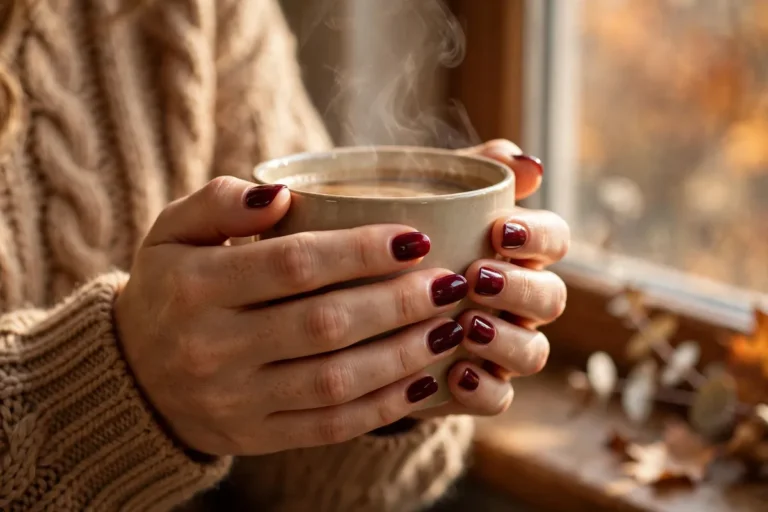
Squoval. Squoval is exactly what it sounds like: square plus oval. The tip is flat like a square nail, but the corners are softly rounded. It is the shape for people who love the clean look of square nails but keep catching sharp corners on sweaters and hair. Squoval is strong, practical, and quietly elegant — the shape that looks expensive without trying.
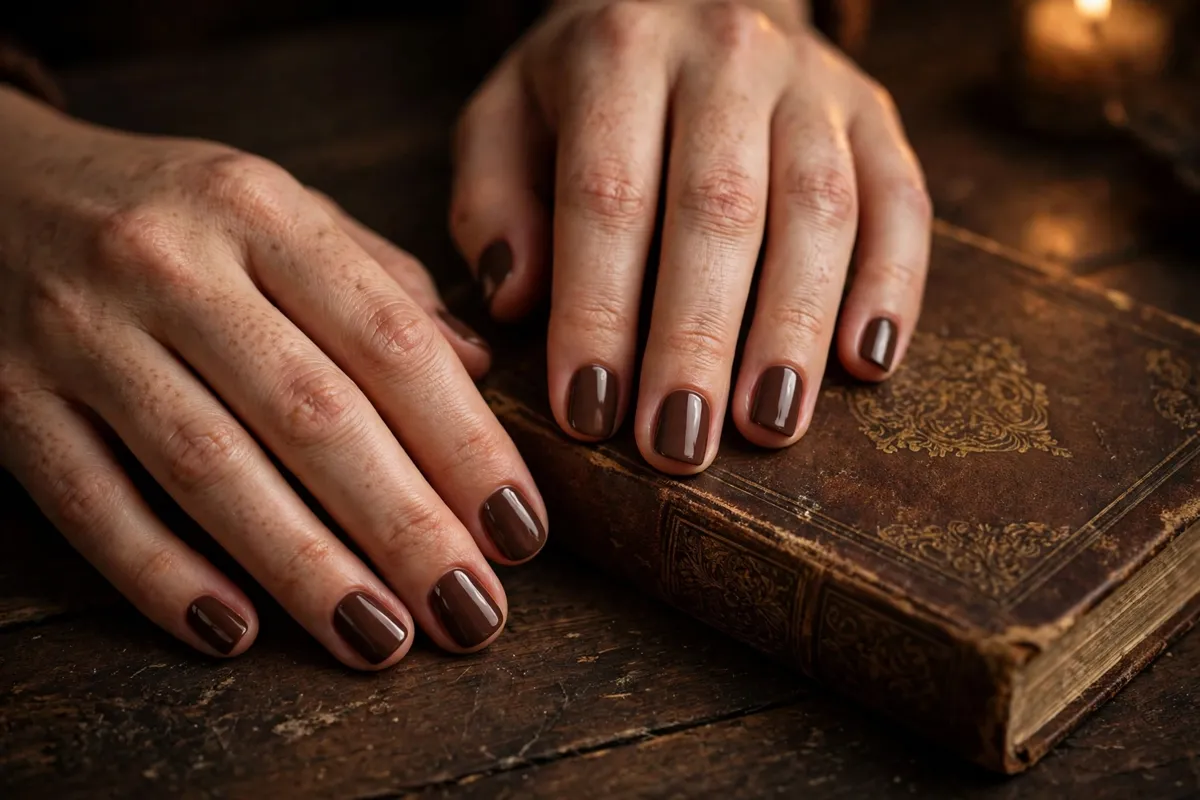
Square. Square nails have straight sides and a flat, straight tip with sharp corners. The look is bold, modern, and confident, and it gives nail art the most even canvas of any shape. Square works best on longer nail beds and stronger nails, because the corners can catch and chip if your nails are thin. In dark shades like oxblood or forest green, square nails look strikingly architectural.
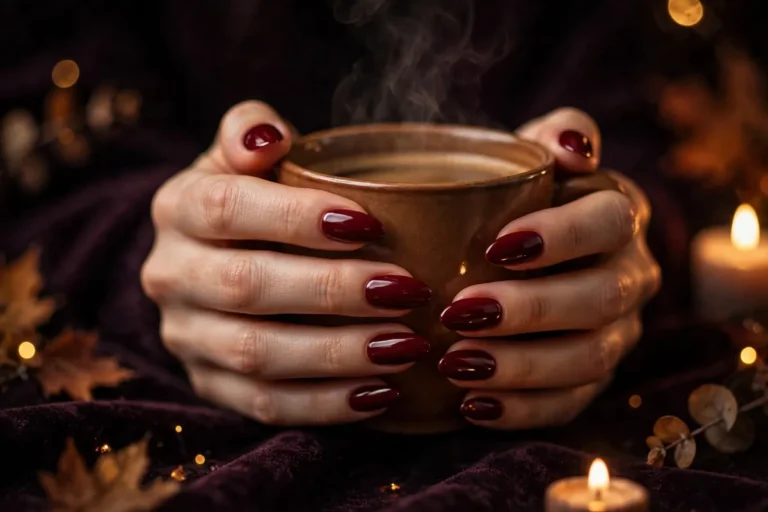
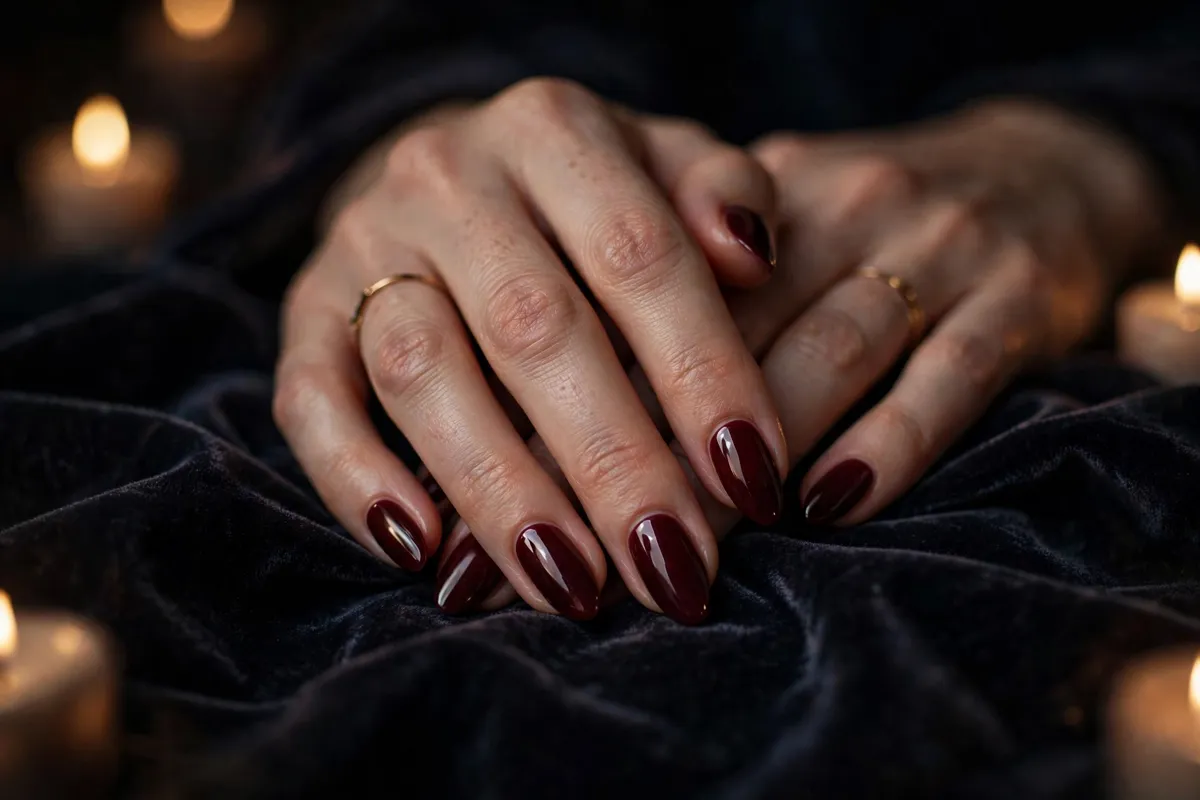
Almond. Almond nails taper from the sides into a soft, rounded point, like the shape of an almond. This is the shape that lengthens fingers most dramatically without going full drama. Almond suits dark romantic colors beautifully — burgundy, plum, chocolate brown — and it gives designs like tortoiseshell plenty of room. It needs medium length, and natural nails usually need gel or acrylic reinforcement to hold the taper without splitting.
Coffin (ballerina). Coffin nails, also called ballerina nails, have straight tapered sides and a flat tip — the silhouette of a coffin, or a ballet slipper, depending on how you look at it. This is the drama shape: it needs real length, so it is almost always done with extensions, and it is the shape you see in most nail-art photos because it offers so much space. If you want a statement manicure, coffin is it.
Stiletto. Stiletto nails taper to a sharp point, like the heel they are named after. They are the boldest of all nail shapes and the least practical — typing, opening cans, and buttoning shirts all become small adventures. Stiletto needs long extensions and regular maintenance, but nothing else photographs quite like it. Save this one for occasions, not everyday life.
How to Choose Nail Shapes for Your Hands
There is no single “best” shape, only the best shape for your hands and your life. Start with your nail beds. Short, wide nail beds look longer with oval or almond shapes, which draw the eye outward. Long, narrow nail beds can carry almost anything, including square and coffin, without looking overdone. If your fingers are short, avoid very long stiletto or coffin shapes — they can overwhelm your hands instead of flattering them. If your fingers are long, a neat square or squoval keeps the proportions balanced.
Then be honest about your lifestyle, because the prettiest shape is useless if it breaks in three days. Hands-on jobs, gym routines, and small children all argue for shorter, rounder shapes: round, squoval, or short oval. If your nails are naturally weak or peeling, round and oval put the least stress on the tips. Pointed shapes — almond, stiletto, coffin — concentrate pressure at the tip, so they need stronger nails or reinforcement.
Your wardrobe matters too. A short squoval in chocolate brown or deep burgundy fits an office, a classroom, and a dinner out without a second thought. A long coffin in black with gold foil is a weekend statement. Neither is wrong; they are just different tools. Many people keep a practical shape for everyday life and switch to a dramatic one for holidays and events, and that is a perfectly good system.
For autumn colour ideas that pair with these shapes, see our fall nails guide.
One more test before you commit: try the shape in a cheap polish first. File your nails into the new shape, wear it for a week in a color you already own, and see how it feels. If you are catching the corners on everything by day two, the shape is telling you something. Changing a shape costs nothing but a file and ten minutes; growing out a broken nail costs weeks.
How to File Each Nail Shape at Home
Filing is where most home manicures go wrong, and the mistake is almost always the same: sawing back and forth. That motion frays the nail edge and causes splitting. Instead, file in one direction only, from the side toward the center, with a fine-grit file. Take your time — shaping is not a race. Dermatologists’ nail-care tips also stress filing in one direction and keeping nails clean and dry — see the American Academy of Dermatology’s skin, hair and nail care tips.
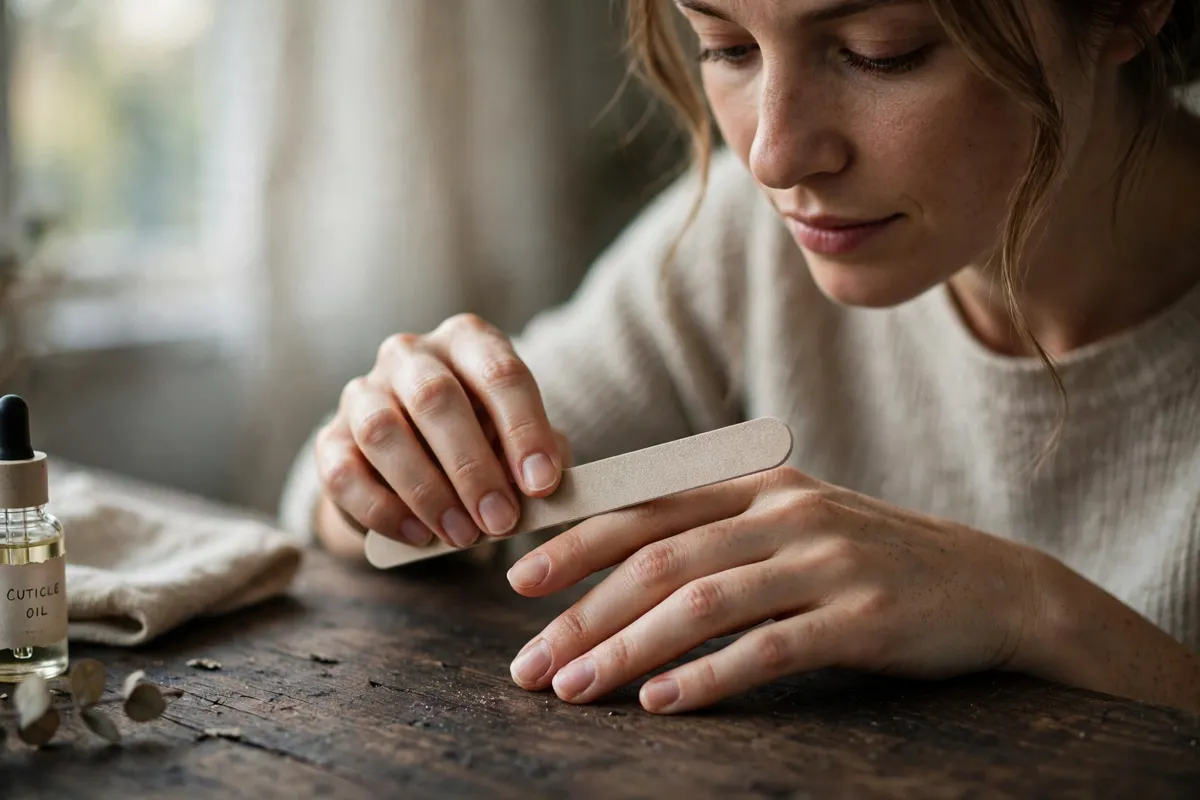
For round and oval shapes, file the sides at a slight angle and round the tip in smooth, even strokes. Check both hands against each other often; it is easy to file one hand shorter than the other without noticing. For squoval, file straight across the tip first, then soften just the corners with a few angled strokes. For square, file straight across and keep the corners crisp — resist the urge to round them, or you have squoval again.
Almond and coffin shapes are harder at home because they need length and symmetry. File the sides in toward the center at a consistent angle, and step back to compare nails frequently. If your natural nails are short, do not force these shapes — grow them out first, or book extensions and let a technician set the shape. A shape filed onto nails that are too short just looks stubby and breaks fast.
For the most dramatic shape in practice, see our goth coffin nails designs.
Whatever shape you choose, finish the same way: smooth the edge with a buffer, push cuticles back gently (never cut them), and always use a base coat before color. Dark polish stains bare nails, and a base coat also gives the polish something to grip, which means fewer chips no matter the shape.
Nail Shapes for Dark and Romantic Colors
Dark polish shows shape more honestly than pale polish does. A sheer nude forgives an uneven tip; a glossy black does not. That is actually good news, because it means dark colors reward a good shape more than any other color family.
Almond and coffin are the classic dark-romantic shapes: they give deep burgundy, oxblood, and black the long, elegant canvas they deserve. Square nails in forest green or midnight navy look modern and a little severe, in the best way. And short round or squoval nails in chocolate brown or plum are the quiet luxury option — dark without drama, polished without effort.
If you are new to dark polish, start with squoval or oval in a deep shade you love. You get the mood without the maintenance, and you can always go longer and sharper next time.
Nail Shapes FAQ
What nail shape makes fingers look longer?
Almond and oval shapes lengthen the look of your fingers most, because they taper and extend past the fingertip. Coffin and stiletto also elongate, but they need extensions and more upkeep.
What is the strongest nail shape?
Round and squoval are the strongest everyday nail shapes. Their edges do not catch easily, and they distribute pressure evenly, so they break less often than square or pointed shapes.
Can I change my nail shape at home?
Yes, if you are moving to a shorter or rounder shape. Going from square to squoval or oval is easy. Going to almond or coffin needs length, so grow your nails out first or use extensions.
Do nail shapes work differently on short nails?
Yes. Short nails suit round, squoval, and short oval best. Almond, coffin, and stiletto need medium to long length to show their shape at all — on very short nails they just look pointed or uneven.
How often should I reshape my nails?
Every one to two weeks, when you redo your polish. Filing a little at each manicure keeps the shape consistent without removing too much length at once.