Acrylic Nails: Styles, Care, and Removal Guide
Acrylic nails have stayed popular for a simple reason: they give you length, shape, and a flawless finish regular polish cannot match. Whether you want short, practical nails for everyday life or long, dramatic coffin nails for an occasion, acrylic nails can be shaped to suit your hands, your job, and your style. This guide covers what acrylic nails are, the styles worth trying, how to look after them, and how to remove them safely without wrecking your natural nails underneath.
What Are Acrylic Nails?
Acrylic nails are artificial nail extensions made by combining a liquid monomer with a powder polymer. Your nail technician brushes that mixture onto your natural nail, or onto a tip or form, and it hardens into a strong, sculptable layer. Once it sets, it can be filed into almost any shape and finished with polish, gel colour, or nail art.
That strength is the main appeal. Natural nails bend, split, and break; acrylic nails hold their shape for weeks and give nail art a smooth, even canvas. They differ from gel nails, which cure under a UV or LED lamp, and press-ons, which stick on with glue or tabs. Acrylics are sculpted by hand, so a good technician matters — shape, thickness, and finish all come down to skill.
A full set usually takes one to two hours, depending on length and design; short acrylic nails are quickest, long lengths and detailed art take longer. Expect a fill every two to three weeks as natural nails grow out.
Popular Acrylic Nail Styles
Here are the styles people ask for most, and who each one suits best.
Short Acrylic Nails
Short acrylic nails are the practical choice, and they are having a real moment. They give you the strength and neat finish of acrylics without the length getting in the way of typing, cooking, or gym sessions. A short square or short squoval shape looks clean and modern, and it is the easiest length to maintain between fills. If you are trying acrylics for the first time, start short — you can always go longer next time.
Long Acrylic Nails
Long acrylic nails are pure drama. Stiletto points, long coffin shapes, and sculpted almond lengths give nail artists the most room for detailed designs. They do need more care — long lengths are more likely to catch or break if you use your nails as tools.
Acrylic Nail Designs
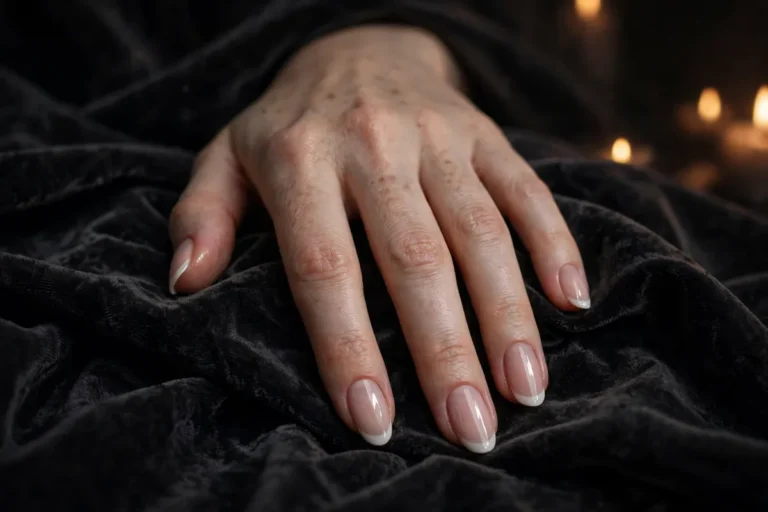
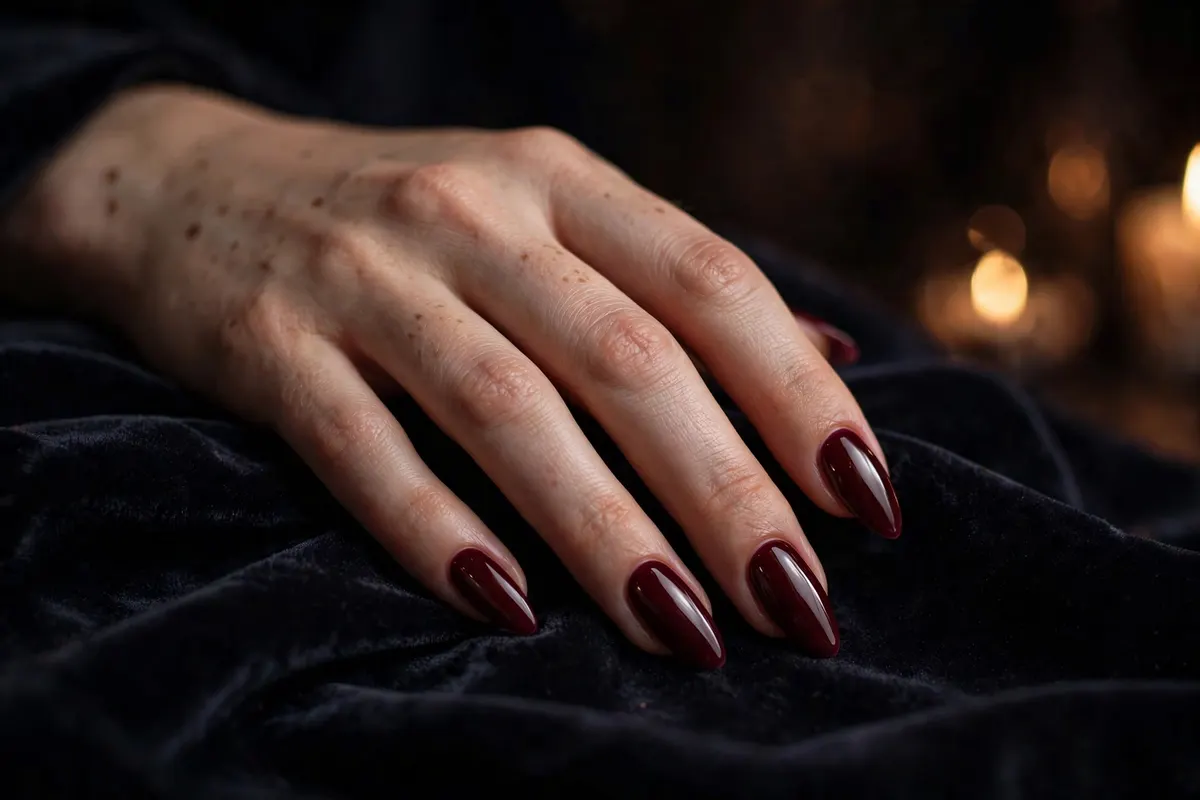
When it comes to acrylic nail designs, the options are almost endless. Classic French tips suit everything, from weddings to work. Ombre fades, chrome finishes, glitter fades, and delicate line art add interest without going over the top. For autumn, deep burgundy, chocolate brown, oxblood, and black cherry keep coming back — they pair beautifully with dark, romantic outfits. If you want seasonal colour ideas, our fall nails guide rounds up the shades that work hardest in autumn.
Nude Acrylic Nails
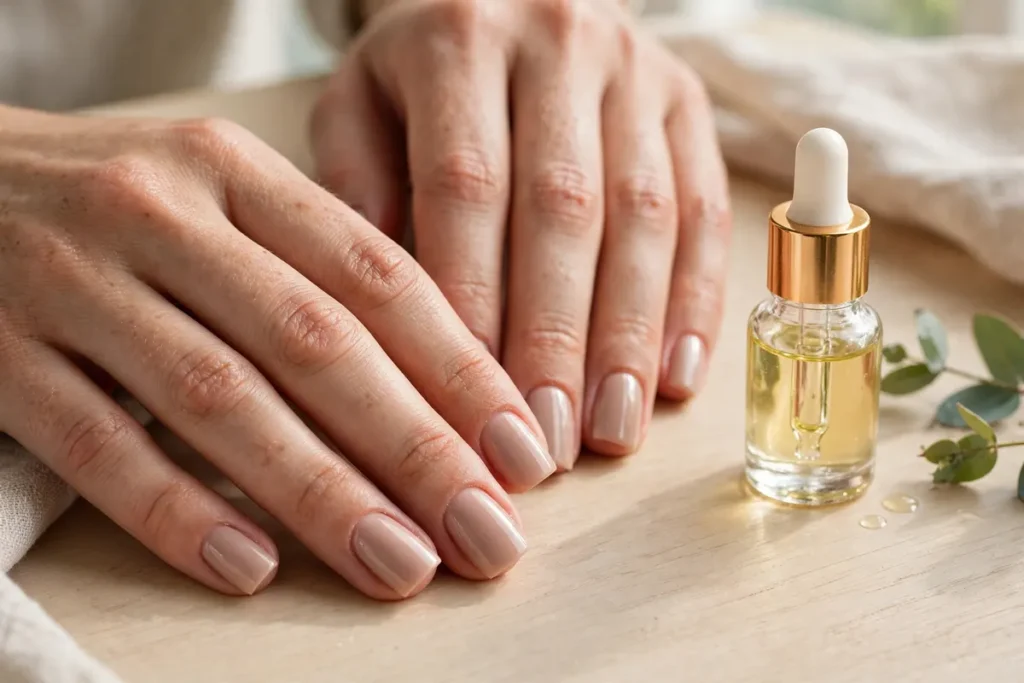
Nude acrylic nails are the quiet luxury of the nail world. A soft beige, milky pink, or warm taupe lengthens the look of your fingers and goes with everything in your wardrobe. Regrowth also shows less than with a dark colour, and small chips are harder to spot — one set that works for the office, a dinner out, and a weekend away.
How Acrylic Nails Are Applied
Knowing what to expect helps you spot a rushed job. First, natural nails are gently cleaned, shaped, and lightly buffed — not filed down aggressively. A primer or dehydrator is applied, then tips are glued on or forms are placed if you want extra length. The acrylic mixture is then sculpted over the nail, shaped while it is still workable, and filed smooth once it hardens. Finally comes your chosen colour or design, plus a top coat for shine and protection.
A good set should feel comfortable, not tight or sore. If your nails ache or feel hot during application, say so straight away — pain is not normal, and a reputable technician will adjust. Very thick, bulky acrylics are also a warning sign: a well-made set looks natural from the side, with a gentle curve rather than a heavy ridge.
How Long Do Acrylic Nails Last?
With regular fills, a set of acrylic nails can last six to eight weeks, each fill refreshing the grown-out area near the cuticle. Most people book a fill every two to three weeks. Without fills, a visible gap appears at the cuticle, and leaving lifting edges risks moisture trapped underneath — which can lead to breakage or infection.
Daily habits matter too: gloves for cleaning, never using nails to open cans or scrape labels, and cuticle oil by your sink all help a set last longer. Acrylic nails are strong, not indestructible.
Acrylic Nails Aftercare
Aftercare is where most people either love or regret their acrylic nails. The rules are simple, but they do make a difference.
Keep nails and cuticles moisturised. A drop of cuticle oil once or twice a day stops the skin around your nails drying out and keeps the acrylic looking fresh.
Be gentle with water and chemicals: long hot baths and harsh cleaning products weaken acrylics and dry out your hands, so gloves are your best friend for housework. If a nail lifts at the edge, do not peel or pick at it — that pulls layers off your natural nail. Book a repair instead.
Watch for warning signs: redness, swelling, persistent soreness, or greenish discolouration under a lifted nail all mean having the set removed professionally.
How to Remove Acrylic Nails Safely
This is the part people get wrong most often, and it is the part that matters most for the health of your natural nails. Never pry, peel, or bite acrylic nails off. Ripping them away takes layers of your natural nail with them, leaving thin, sore, peeling nails that take months to recover.

The safest home method is the soak-off: file the top coat off gently, soak cotton pads in pure acetone, place them on each nail, and wrap fingertips in foil. After 20 to 30 minutes the acrylic should push off gently with an orangewood stick. If it resists, re-wrap and wait rather than forcing it. Afterwards, wash your hands and apply cuticle oil.
Professional removal is still the kindest option, especially for a first set or very long lengths. A technician removes the acrylics evenly and can advise on a break if your nails need rest.
For general nail health advice, see the American Academy of Dermatology’s skin, hair and nail care tips.
Acrylic Nails vs Gel vs Press-On Nails
Choosing between acrylic nails, gel nails, and press-on nails comes down to how long you want them, how much maintenance you accept, and how your lifestyle treats your hands.
Acrylics win on strength and shape freedom — best for long lengths and sculpted shapes. Gel nails feel lighter and more flexible, suiting a natural-length manicure with a high-gloss finish. Press-on nails win on convenience and cost: change them at home in minutes, ideal for a special occasion or while you decide whether extensions suit you.
Many people rotate between them — acrylics for holidays and events, gel or press-ons for quieter weeks.
Choosing a Shape for Your Acrylic Nails
Shape changes everything about how acrylic nails look. Almond and oval lengthen shorter fingers; square and squoval look sharp and modern, especially short; coffin suits longer lengths, and stiletto is the boldest choice. If you are still deciding, our nail shapes guide explains how each shape flatters different hands.
Frequently Asked Questions
Do acrylic nails damage your natural nails?
Acrylic nails themselves need not damage natural nails. Most damage comes from aggressive filing, or from peeling them off instead of soaking them off. Choose a reputable technician, do not pick at lifting edges, and remove them safely.
How much do acrylic nails cost?
Prices vary by salon, length, and design, but a full set typically costs more than a gel manicure because of the time and skill involved. Short, simple sets are most affordable; long lengths and detailed art add to the price, and fills cost less than a full set.
Can you wear acrylic nails every day?
Yes, with regular fills. Keep fills on schedule, moisturise daily, wear gloves for cleaning, and give natural nails a short break if they feel thin or sore.
Are short acrylic nails better for beginners?
For most beginners, yes. Short acrylic nails are easier to live with, cheaper to maintain, and less likely to break while you get used to the extra length.
Final Thoughts
Acrylic nails are popular because they work: length when nature did not, a shape that flatters your hands, and a finish that lasts for weeks. Choose a length you can live with, look after the set with cuticle oil and gloves, and remove them safely when the time comes.