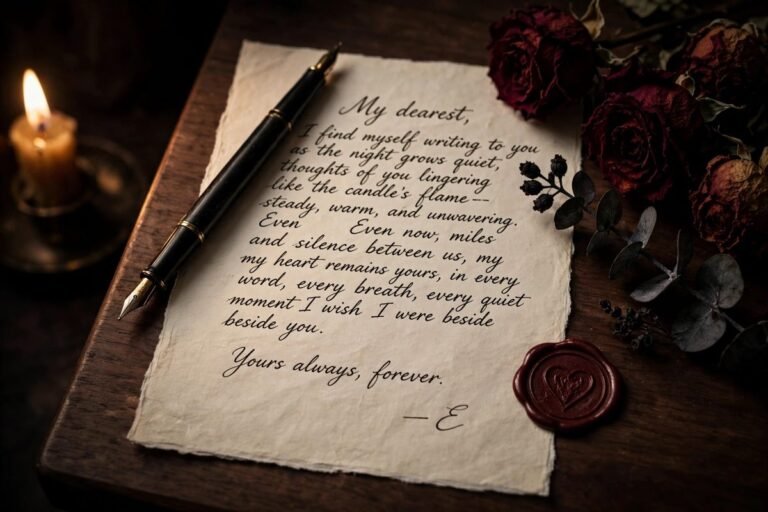
How to Write Gothic Poetry: 10 Dark Romantic Techniques for 2026

I wrote my first gothic poetry attempt at seventeen and it was, frankly, a mess: a raven, a graveyard, the word “nevermore” — every cliché lined up like mourners at a funeral. It had all the furniture of gothic poetry and none of the feeling. That is the trap most of us fall into. We reach for the props — bats, blood, castles — before we have learned the craft.
The real secret is this: gothic poetry is not a list of dark things. It is a way of seeing. The Victorians who mastered it — Poe, Coleridge, the Brontës — were writing about ordinary feelings (grief, longing, fear of death) through an extraordinary lens. These ten techniques are the lens. Each one comes with an example couplet so you can see it working. Steal the method, not the words.
Gothic Poetry Technique 1: Atmosphere Before Plot
In gothic poetry, the weather arrives before the story. Do not tell the reader what is happening — tell them what it feels like in the room. Fog, candlelight, the sound of rain on glass: atmosphere is the doorway, and readers must walk through it before they care about anything else. Write three full sensory details before a single event happens.
The rain has found the cracks in every door,
And something knocks that did not knock before.
Gothic Poetry Technique 2: Victorian Diction, Used Sparingly
Victorian diction is seasoning, not the meal. Use one archaic or elevated word per stanza — shade, veil, solemn, hollow — and let the rest of your language stay modern and sharp. The contrast is what makes the old words glow. Too many and you sound like a costume; just enough and you sound like a voice.
I walked the meadow at the edge of night,
And found the moon a pale and watchful shade.
Gothic Poetry Technique 3: The Ruin as Metaphor
Every gothic poem needs a ruined thing: a house, a chapel, a marriage, a heart. The reader feels the metaphor before they understand it.
The chapel stands where no one comes to pray,
Its broken windows keeping back the day.
Gothic Poetry Technique 4: Sound Devices — Alliteration and Assonance
Poe knew this better than anyone: gothic poetry should sound haunted. Alliteration (repeated consonants) and assonance (repeated vowel sounds) create a chanting, incantatory music. Low and lonely, lost and long — read it aloud and feel how the tongue stumbles the way a heartbeat stumbles. The rule is simple: write your lines, then read them out loud, and let the sounds lead. If a line does not sing, it does not stay.
Silent, the snow settles on the stone,
A soft and solemn hymn the night has known.
Gothic Poetry Technique 5: Working with the Sublime
The Romantics had a word for it — the sublime: beauty mixed with terror. A cliff edge is sublime. So is a thunderstorm, a deep forest, a love you cannot control. Gothic poetry lives in the overlap where something is gorgeous and frightening at the same time. Ask of every image: is it a little dangerous? A sunset is just pretty. A sunset with a storm behind it is sublime — and that is the one you put in the poem.
The cliff path crumbled where the sea birds cried,
And beauty stood too close to suicide.
Gothic Poetry Technique 6: The Unreliable “I”
The most unsettling speaker in gothic poetry is one who might not be telling the truth. Let your narrator be strange — obsessed, grief-drunk, half-dreaming. Hints of unreliability (a contradiction, a detail that does not quite fit) make the reader lean in. You are not writing a diary entry; you are writing a confession from someone who may be lying to themselves.
I swear I saw her — no, it was the light,
But still her footsteps lingered in the night.
Gothic Poetry Technique 7: The Volta of Dread
Borrowed from the sonnet: the volta is the turn. In gothic poetry, the turn should tilt everything toward dread. Build a stanza that feels safe — warm, familiar, tender — then turn the knife in the last line. The reader was resting; now they are falling. Write the comforting image first, then ask what could corrupt it. That fall from safety to fear is the poem’s heartbeat.
The nursery lamp still burns its gentle gold —
But empty cradles rock, and the room is cold.
Gothic Poetry Technique 8: One Symbol, Used Ruthlessly
Beginners scatter symbols like confetti: a raven here, a rose there, a full moon for good measure. The masters pick one and repeat it with variation. One candle in a vast room means more than ten candles. One locked door that appears in stanza one, stanza three, and the final line becomes a haunting. Choose your single object — a key, a mirror, a pair of gloves — and make every mention change its meaning slightly. Repetition with variation is what makes a symbol feel inevitable.
The key still turns, though the house is sold;
The lock remembers what the doors can’t hold.
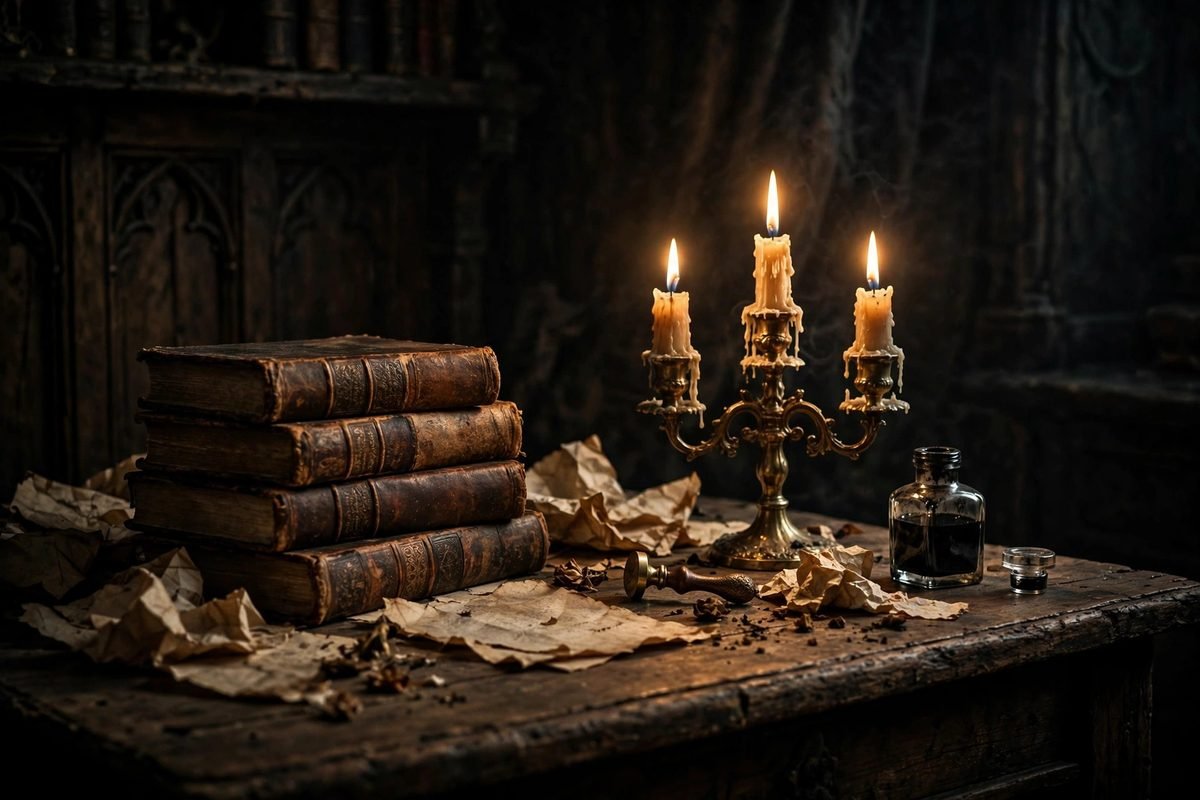
A good writing corner helps too — our guide to dark academia decor ideas will show you how to style a desk that makes you want to reach for the quill. Candles, old books, and a little dramatic lighting do genuine work on the imagination.
Gothic Poetry Technique 9: Meter as a Heartbeat
Meter is the poem’s pulse, and in gothic poetry the pulse should sometimes race and sometimes stop. Common meter (alternating lines of eight and six syllables, like a ballad) is the gothic workhorse — it marches like a procession. But the real craft is breaking the pattern at the moment of greatest horror: a shorter line lands like a stopped heart. Count your syllables in the dark lines. Irregularity should be deliberate, not accidental.
The bell tolled once, then twice, then not again —
I held my breath until the silence came.
Gothic Poetry Technique 10: The Withheld Ending
Never explain the ghost. The moment gothic poetry tells the reader exactly what happened, the magic drains out. End with the door ajar, the letter unfinished, the figure at the window unidentified. Readers will lie awake filling in the blank — and their version will always be scarier than yours. Mystery is not a flaw in the poem; it is the whole point. Leave one question unanswered and the poem stays alive.
I left the light on, and I locked the door —
I never told you what I saw before.

How to Practice These Gothic Poetry Techniques
Read the masters the way a thief studies a lock. Poe’s “The Raven” is a masterclass in sound devices and the unreliable narrator. Coleridge’s “Christabel” teaches atmosphere before plot. The Brontës will show you the sublime on every moor. Notice how each technique is doing its work, then close the book and write your own version — different images, different story, same machinery.
And practice in the right season. If you write these poems at a desk surrounded by warm candlelight and gothic Halloween decor in autumn, you will be amazed how much the room writes with you. Atmosphere is not just a technique for the page — it is a condition for the poet.
FAQ: How to Write Gothic Poetry
What makes a poem “gothic” rather than just dark?
Gothic poetry has the architecture of the Gothic tradition: atmosphere as a character, the sublime (beauty mixed with terror), symbols that repeat and deepen, and an ending that withholds rather than explains. A dark poem can be about grief alone; a gothic poem stages grief in a haunted setting.
Do I need to use old-fashioned language in gothic poetry?
No. A few elevated words add flavour, but modern gothic poets like Nick Cave and Carol Ann Duffy write in contemporary language and are unmistakably gothic. Technique 2 above applies: Victorian diction is seasoning, not the whole dish. One archaic word per stanza is plenty.
What are good dark poetry prompts to start with?
Try these: write about the last lit window in a dark street; describe a wedding from the perspective of a ghost at the back of the church; make a list of sounds a house makes when everyone is asleep and turn it into a poem; write the letter the locked room would write if it could. Each one forces atmosphere, symbol, and withheld ending.
How long should a gothic poem be?
As long as the haunting lasts and not a line longer. Short poems (8–20 lines) hit harder for beginners because every line must earn its place. Longer poems need the meter discipline of Technique 9 or they sag. Start short; let the poem grow only when it demands it.
Now write it. Light the candle, open the notebook, and let the first line be the room before it is the story. These ten techniques are a foundation, not a formula — the gothic tradition has survived two hundred years because every poet who touches it adds their own ghosts. Yours are waiting.